
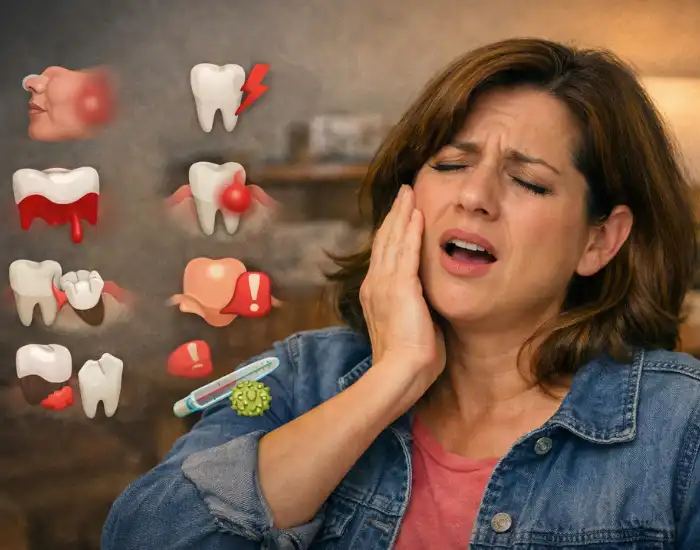
Dental problems don’t always begin dramatically. Sometimes it starts with mild discomfort while chewing. Other times, it’s a dull ache that wakes you up at 2 a.m. The challenge is knowing when a tooth issue is simply inconvenient — and when it is a true dental emergency.
If you are experiencing severe pain, swelling, bleeding, or signs of infection, you may need immediate care from an emergency dentist in Miami or a trusted emergency dentist near you.
Ignoring serious symptoms can allow infection to spread beyond the tooth into surrounding tissues. Early treatment prevents more complex procedures, reduces complications, and protects your overall health.
This comprehensive guide explains:
- What qualifies as a dental emergency
- The 7 major warning signs
- Infection symptoms you should never ignore
- When to go to the ER vs. a dentist
- What to do before your appointment
- Answers to common emergency questions
Table of Contents
- What Is a Dental Emergency?
- Why Acting Quickly Matters
- 7 Signs Your Tooth Problem Is a Dental Emergency
- Infection Warning Signs You Should Never Ignore
- Dental Emergencies in Children
- When to Visit the ER Instead of a Dentist
- What Happens During an Emergency Dental Visit
- What to Do Before You See the Dentist
- FAQs
What Is a Dental Emergency?
A dental emergency is any oral health condition that requires immediate professional attention to:
- Relieve severe pain
- Stop bleeding
- Treat infection
- Save a tooth
- Prevent further complications
Not every dental issue is urgent. For example, a small chip without pain can often wait a few days. But certain symptoms signal that delaying care could lead to serious consequences.
A helpful rule:
If the problem is causing intense pain, swelling, active bleeding, or affecting your ability to eat, speak, breathe, or swallow — it may be an emergency.
Why Acting Quickly Matters
Dental infections do not behave like minor cuts or bruises. The mouth contains bacteria, and when infection develops inside a tooth or gum tissue, it can spread into:
- Jawbone
- Sinuses
- Neck tissues
- Facial spaces
In rare cases, untreated infection can enter the bloodstream.
Early treatment often means:
- Simpler procedures
- Lower costs
- Less discomfort
- Faster recovery
Delaying care can mean more extensive treatment later.
Many patients try to “wait it out.” Unfortunately, dental pain is often progressive. It tends to worsen, not improve.
7 Signs Your Tooth Problem Is a Dental Emergency
1. Severe, Persistent Tooth Pain
A mild sensitivity to cold drinks is common. But severe, throbbing, or constant tooth pain is not normal.
Emergency-level pain often:
- Wakes you up at night
- Gets worse when lying down
- Radiates to the ear or jaw
- Does not improve with over-the-counter medication
- Persists for more than several hours
This type of pain may indicate:
- Deep tooth decay
- Nerve inflammation
- Dental abscess
- Cracked tooth
- Advanced gum infection
If pain interferes with eating, sleeping, or concentrating, contact an emergency dentist in Miami immediately.
2. Facial, Jaw, or Gum Swelling
Swelling is one of the clearest signs of infection.
You may notice:
- Puffy or tender gums
- Swelling in the cheek
- Tightness in the jaw
- Enlarged lymph nodes
- Warmth around the affected area
Swelling that spreads or worsens over hours is especially concerning.
If swelling extends toward the eye, neck, or throat, seek immediate evaluation. Untreated infection can spread beyond the tooth and require more complex intervention.
This is not something to ignore overnight.
3. Uncontrolled Bleeding
Some light bleeding can occur with gum irritation or after dental procedures.
However, emergency bleeding includes:
- Heavy bleeding after trauma
- Bleeding lasting longer than 10–15 minutes
- Blood that does not clot
- Bleeding accompanied by swelling or severe pain
Persistent bleeding requires urgent attention.
Apply gentle pressure with clean gauze and seek immediate care.
4. Knocked-Out (Avulsed) Tooth
A knocked-out permanent tooth is extremely time-sensitive.
The best outcomes occur when treatment happens within 30–60 minutes.
If this happens:
- Pick up the tooth by the crown (not the root).
- Rinse gently with water if dirty.
- Try to place it back into the socket if possible.
- If not, store it in milk.
- Get to an emergency dentist immediately.
Quick action significantly increases the chance of saving the tooth.
5. Cracked or Broken Tooth with Pain
A small chip may not require urgent care. But a deep fracture with pain can expose the inner pulp of the tooth.
Emergency signs include:
- Sharp pain when biting
- Sudden temperature sensitivity
- Visible crack extending into the gum line
- Bleeding near the fracture
Without prompt treatment, bacteria can enter and cause infection.
Contact an emergency dentist if you suspect a serious crack.
6. Signs of a Dental Abscess
A dental abscess is a pocket of pus caused by bacterial infection.
Warning signs include:
- Severe throbbing pain
- Pimple-like bump on the gum
- Drainage of pus
- Bad taste in the mouth
- Fever
- Swelling of the jaw
Abscesses do not resolve on their own. Antibiotics alone are usually not enough. The source of infection must be treated.
Ignoring an abscess increases the risk of spread.
7. Difficulty Swallowing or Breathing
This is a medical emergency.
If swelling or infection causes:
- Trouble breathing
- Difficulty swallowing
- Throat tightness
- Rapid facial swelling
Go to the nearest emergency room immediately.
After stabilization, follow up with an emergency dentist in Miami to treat the underlying dental issue.
Infection Warning Signs You Should Never Ignore
Infections can progress quietly before becoming severe.
Pay attention to:
- Fever
- Chills
- Fatigue
- Increasing swelling
- Headache
- Jaw stiffness
- Swollen lymph nodes
Even if pain decreases temporarily, infection may still be present.
Early treatment prevents hospitalization and more invasive procedures.
Dental Emergencies in Children
Children can also experience dental emergencies.
Common pediatric emergencies include:
- Knocked-out permanent teeth
- Severe toothaches
- Swelling of the gums
- Trauma from sports injuries
Baby teeth that are knocked out are typically not replanted. However, evaluation is still necessary to assess damage.
If a child has facial swelling or fever with tooth pain, seek urgent care.
When to Visit the ER Instead of a Dentist
Many people are unsure whether to call a dentist or go to the hospital.
Go to the ER if you have:
- Trouble breathing
- Difficulty swallowing
- Severe facial trauma
- Uncontrolled bleeding
- High fever with swelling
Emergency rooms can provide pain control and stabilize serious infections.
However, ER physicians usually do not perform dental procedures like root canals or extractions. You will likely still need to visit an emergency dentist in Miami afterward.
What Happens During an Emergency Dental Visit?
Emergency dental appointments are focused and efficient.
Typically, the dentist will:
- Review your symptoms
- Take digital X-rays
- Examine the affected area
- Diagnose the cause
- Provide immediate relief
Treatment may include:
- Draining infection
- Prescribing medication
- Placing a temporary restoration
- Performing a root canal
- Extracting a severely damaged tooth
The goal is to eliminate pain, stop infection, and prevent further damage.
What to Do Before You See the Dentist
If you cannot be seen immediately:
Pain:
- Rinse with warm salt water
- Take over-the-counter pain relievers as directed
- Avoid chewing on the affected side
Swelling:
- Apply a cold compress externally for 15-minute intervals
Bleeding:
- Apply firm pressure with clean gauze
Avoid:
- Placing aspirin directly on the gums
- Using sharp objects to poke the area
- Ignoring worsening symptoms
Walk-in appointments are often available. Call now for same-day care if symptoms are severe.
Frequently Asked Questions
1. How do I know if my toothache is an emergency?
If pain is severe, persistent, or accompanied by swelling, fever, or difficulty eating, it may be an emergency.
2. Can I wait a few days for swelling?
Facial swelling should not be ignored. It may indicate infection requiring urgent treatment.
3. Are antibiotics enough for a dental infection?
Antibiotics may reduce symptoms temporarily, but the source of infection must be treated by a dentist.
4. What if my pain goes away suddenly?
Sudden pain relief can sometimes mean the nerve has died. This still requires evaluation.
5. Is a broken filling an emergency?
If it causes pain or exposes sensitive tooth structure, it should be addressed quickly.
6. Can stress cause dental emergencies?
Stress can contribute to teeth grinding and fractures, but infection and trauma are more common emergency causes.
Get Immediate Help at All Smiles Family Dentistry
If you’re experiencing severe tooth pain, swelling, bleeding, or signs of infection, don’t wait. The team at All Smiles Family Dentistry provides fast, same-day emergency dental care for patients throughout Miami and surrounding communities.
Whether you're dealing with a sudden toothache, a broken tooth, or facial swelling, early treatment can prevent complications and relieve discomfort quickly.
We proudly serve patients from:
- Westchester
- Coral Gables
- Kendall
- Flagami
- Areas near SW 40th Street (Bird Road)
Conveniently located and easily accessible, our office is often just 5–10 minutes away for many Miami residents searching for a dentist near me Miami or an emergency dentist Miami.
Call All Smiles Family Dentistry now to schedule an urgent evaluation.
Walk-in appointments may be available for dental emergencies.
Same-day care designed to relieve pain and protect your smile.
Don’t ignore the warning signs. If you suspect a dental emergency, contact All Smiles Family Dentistry immediately for professional, compassionate care.
Final Thoughts
Dental emergencies rarely resolve without professional care. Pain, swelling, infection, and trauma are warning signals your body should not ignore.
Acting quickly protects:
- Your health
- Your smile
- Your comfort
- Your long-term dental stability
If you suspect a dental emergency, contact an emergency dentist in Miami or visit a qualified emergency dentist for immediate evaluation.
Medical Disclaimer: This content is for informational purposes only and does not replace professional dental advice, diagnosis, or treatment. If you are experiencing severe symptoms, contact a licensed dental professional immediately or seek emergency medical care.